Defining Natural Infrastructure
Natural infrastructure (NI) uses natural processes and ecosystem services to support engineering objectives. This innovative approach to infrastructure planning has the potential to provide co-benefits to communities, ecosystems, and economies, and N-EWN partners are leading the charge on implementing NI to achieve these benefits.
Selected Publications:
Life cycle management of natural infrastructure: assessment of state of practice and current tools, Kurth et. al. 2024, Frontiers in Built Environment.
Jointly advancing infrastructure and biodiversity conservation, McKay et. al. 2023. Nature Reviews Earth & Environment.
Improving Natural Infrastructure Practice
Nature-based solutions (NbS) are a relatively new field of study and applications. N-EWN researchers are dedicated to figuring out the best way to implement NbS in engineering, environmental, and community settings.
Selected Publications:
Nature-based solutions as buffers against coastal compound flooding: Exploring potential framework for process-based modeling of hazard mitigation, Radfar et. al. 2024, Science of the Total Environment.
Evaluating thin-layer sediment placement as a tool for enhancing tidal marsh resilience: A coordinated experiment across eight US National Estuarine Research Reserves, Raposa et. al. 2023, Estuaries and Coasts.
Integrating People and Policy
We’re better together. N-EWN partners are working to make sure everyone has a seat at the table when we talk about nature-based solutions.
Infrastructure managers bear a responsibility for ensuring all members of a community are being fairly serves by infrastructure choices. To support sustainable solutions, managers need a clear and concise set of guidelines for incorporating social equity into project decision making.
Selected Publications:
Human well-being and natural infrastructure: assessing opportunities for equitable project planning and implementation, Kalaidijan et. al. 2024, Frontiers in Ecology and Evolution.
Operationalizing equity for integrated water resources management, Seigerman et. al. 2022, Journal of the American Water Resources Association.
Bringing People Together
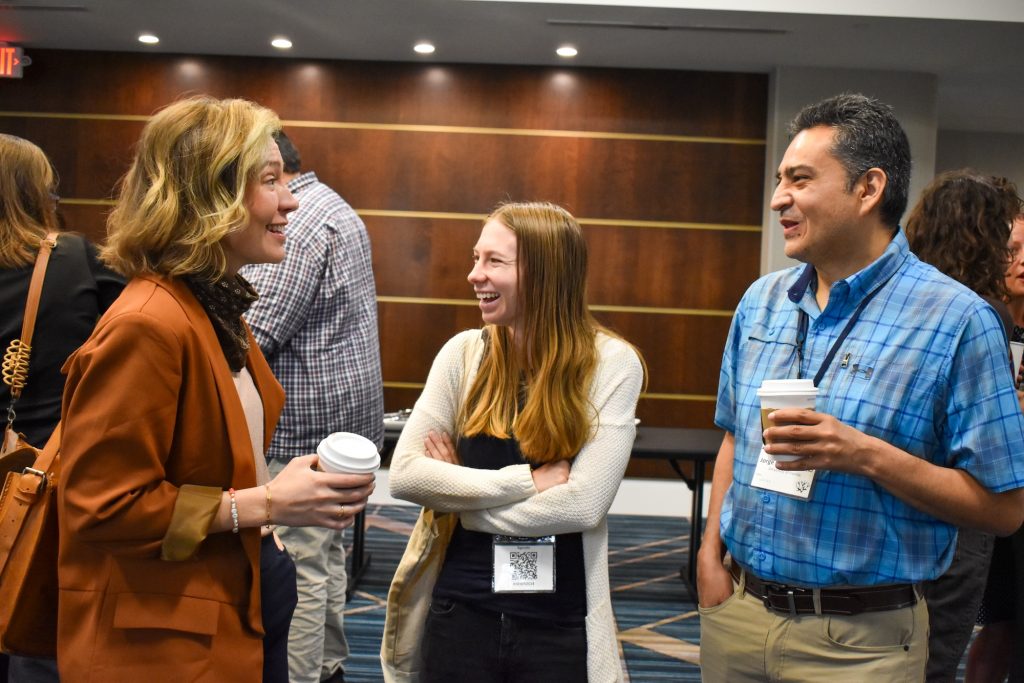
Nature-based Solutions Policy & Practice Forums
These annual in-person forums have been co-hosted with partners across the country, aiming to identify the policy and practice needs of the growing field of nature-based solutions. More information about each year’s forum below:
Knowledge Series
This monthly, public-facing webinar series features topics from across the field of engineering with nature knowledge. Continuing Education Credits (1-hr) are available to all attendees who join live. More information & registration link below:
More N-EWN Events

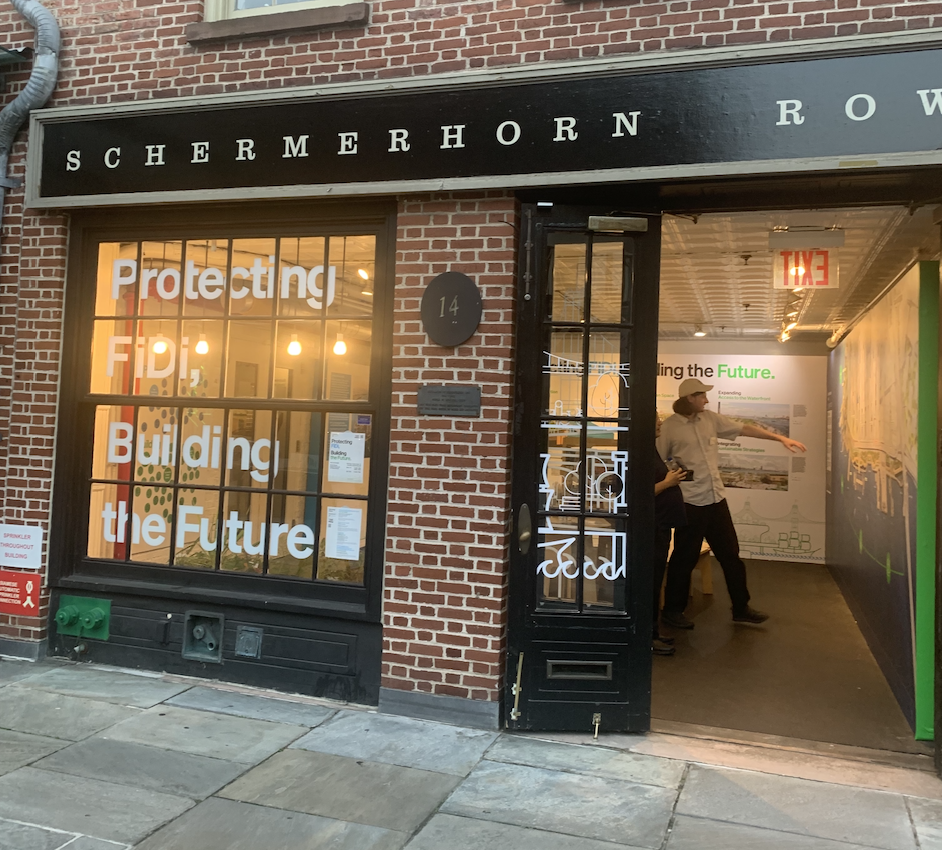


Special Topics
-
Partner Takeover: UC Santa Cruz Center for Coastal Climate Resilience
Hello from the UC Santa Cruz Center for Coastal Climate Resilience (CCCR)! We’re excited to join you here as part of this social media takeover with our partners at N-EWN. At CCCR, we’re building solutions to reduce coastal risks locally, CA-wide, nationally and internationally. We are helping communities build resilience and adapt to rising risks.…
-
September 2025 Knowledge Series: Co-producing Coastal Resilience: The Stone Living Lab as a Collaborative Model for Testing Nature-Based Approaches
Katherine Dafforn, Stone Living Lab & University of Massachusetts Boston The Stone Living Lab brings research into practice by designing and testing Nature-based Approaches (NbAs) to strengthen coastal resilience along urban shorelines. Partnering with municipal, state, and federal agencies, and collaborating with members of the Massachusett Tribe at Ponkapoag, the Lab emphasizes projects that inform…
-

Partner Takeover: ECOncrete
Time for another partner takeover! Check out these upcoming events with our partner ECOncrete: Are you attending NY Climate Week? Join one of our ECOncrete Field Sessions to explore resilient waterfronts with our experts and discuss ecological design & engineering, nature-inclusive technology, and regenerative blue finance. And join us for drinks at our new New…
-

New publication: Nature-based solutions and compound flooding
Nature based solutions provide many benefits including mitigation of flooding impacts. Recently Dynamic Solutions, LLC collaborated with ERDC Coastal and Hydraulics Lab to advance fundamental understanding of interacting flood sources through a case study that simulated varying Mississippi River flood flows during Hurricane Barry. Their analysis provides crucial insight into compound flooding processes, which can be incorporated…
-

EDF: Navigating federal flood planning
Environmental Defense Fund (EDF) just released a new step-by-step guide to help communities and advocates navigate federal flood planning. Flooding, the nation’s costliest disaster, impacts local communities on the coasts and in cities, towns and inland areas alike, and more frequent and severe weather events are prompting communities and local entities to seek lasting solutions.…
-
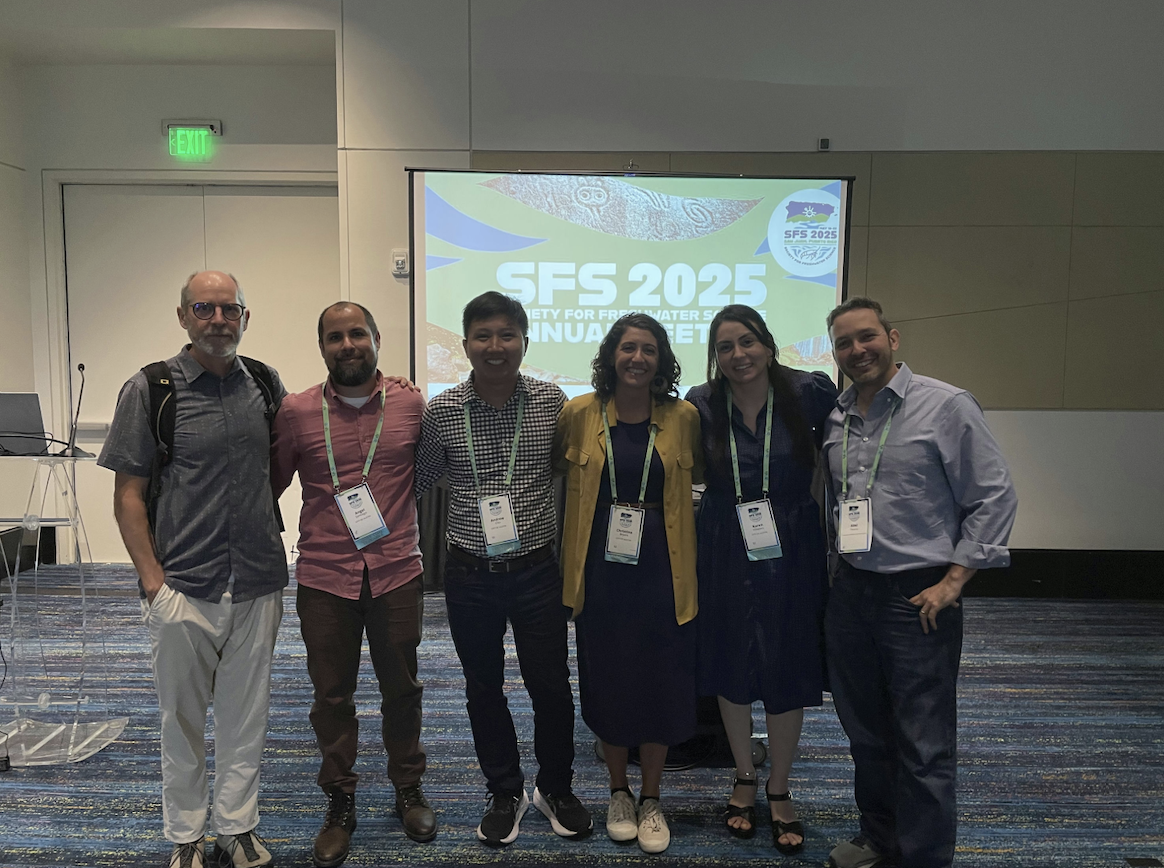
Conference Recap: City of Austin WPD at SFS 2025
Team members from Austin, Texas’ Watershed Protection Department were delighted to attend the Society of Freshwater Science conference in San Juan, Puerto Rico in May 2025. Here’s a quick recap: Angel Santiago presented our latest results on modeling sediment and water quality in Austin. The modeling mimics conditions under storm and base flow and was…
-
River Dynamics and Sturgeon Habitat: Dynamic Solutions and ERDC Publications
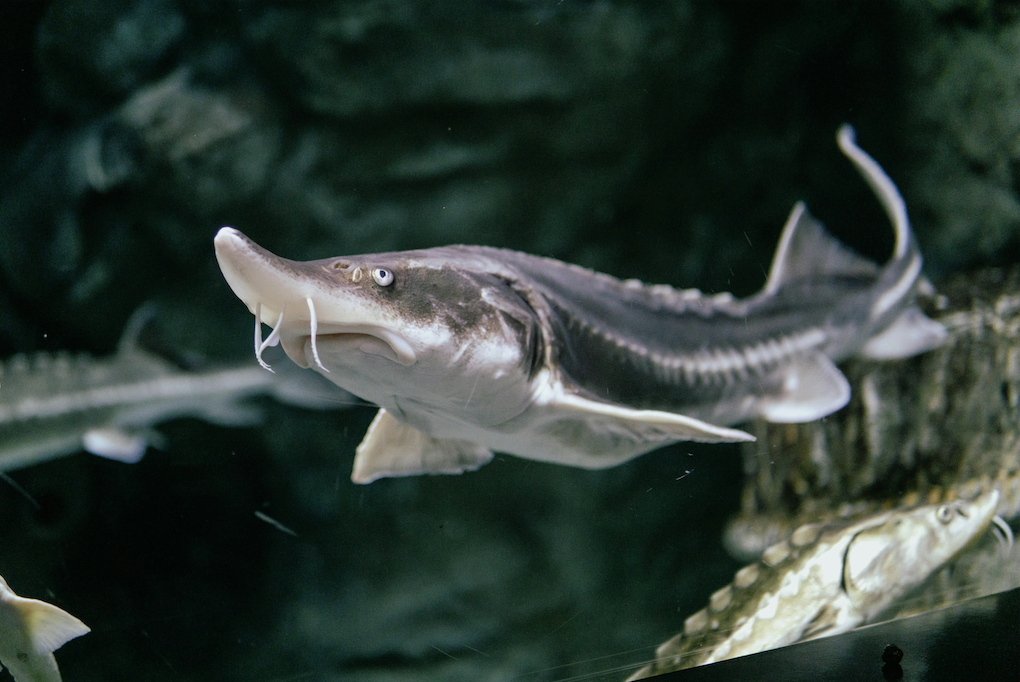
Dynamic Solutions has completed numerous studies for the US Army Corps of Engineers on the Mississippi River that serve the purposes of navigation and flood control paired with ecosystem sustainability. We are proud that two of these studies were published in the esteemed collection of Mississippi River Geomorphology and Potamology technical reports. Dynamic Solutions performed…
-

Experts meet to discuss Wetland Restoration in Mannington Meadows, NJ
Representatives from the University of Georgia, Ducks Unlimited, USACE, New Jersey Department of Environmental Protection (NJDEP), USFWS, Partnership for the Delaware Estuary, New Jersey Conservation Foundation, The Nature Conservancy, Conserve Wildlife NJ, and NOAA on Monday, July 22 to discuss plans for the restoration of the eroded Mannington Meadows marsh complex and the ongoing restoration of…
-

Measuring What Matters: Towards a More Comprehensive and Equitable Evaluation of Benefits
Pictured above, Scott Pippin (second from the left) discusses promoting NBS by improving how we assess the benefits of infrastructure investments at the Measuring What Matters Summit in Washington D.C. The National Academies of Sciences, Engineering, and Medicine, in collaboration with the U.S. Army Corps of Engineers’ Engineering With Nature® Program and The Water Institute of the Gulf, will…
-

Evolution of Benefits Evaluation and Prioritization of Water Resources Projects
Network for Engineering With Nature partners, The Water Institute of the Gulf, the Institute for Resilient Infrastructure Systems, and the U.S. Army Corps of Engineers, Engineering With Nature initiative teamed up to analyze past and current benefits evaluation approaches to identify practical options for improving federal practice for evaluating the economic, environmental, and social benefits of…
-

June 2022 Knowledge Series: Economic Valuation of Nature-Based Infrastructure
Ben Blachly, Susana Ferreira, Yukiko Hashida, Grace Anne Ingham, Craig E Landry & Anna Perry The common method used to calculate Benefit-cost analysis does not incorporate the often-times greater long-term benefits of natural infrastructure (NI) over conventional approaches, putting the selection of NI at a disadvantage. Several groups are moving toward an ecosystem services approach to identifying benefits that people obtain…
-
Conference Recap: City of Austin WPD at SFS 2025
Team members from Austin, Texas’ Watershed Protection Department were delighted to attend the Society of Freshwater Science conference in San Juan, Puerto Rico in May 2025. Here’s a quick recap: Angel Santiago presented our latest results on modeling sediment and water quality in Austin. The modeling mimics conditions under storm and base flow and was…
-
River Dynamics and Sturgeon Habitat: Dynamic Solutions and ERDC Publications
Dynamic Solutions has completed numerous studies for the US Army Corps of Engineers on the Mississippi River that serve the purposes of navigation and flood control paired with ecosystem sustainability. We are proud that two of these studies were published in the esteemed collection of Mississippi River Geomorphology and Potamology technical reports. Dynamic Solutions performed…
-

Bustling Bivalves: Dynamic Solutions and Oyster Population Modeling
Oysters provide numerous ecosystem services. From habitat creation to water filtration and energy dissipation, they are natural infrastructure. Not to mention they’re pretty darn tasty and a valuable economic resource. Coastal Louisiana is a major oyster producer, but populations are declining. There is a need for a decision-making tool that can account for system-wide oyster…
-
Native Shorelines: Introducing QuickReef
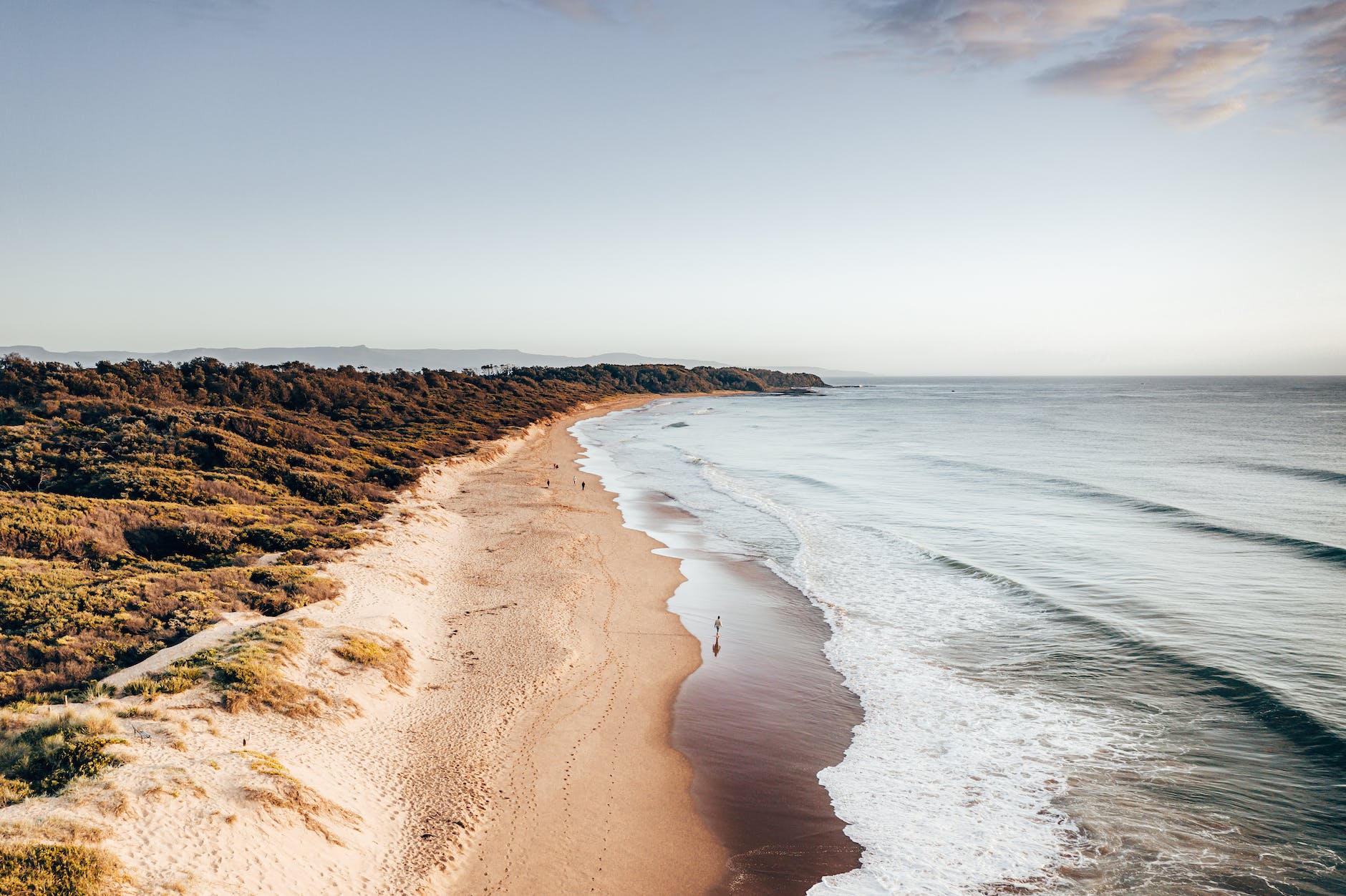
Native Shorelines, a Davey company, proudly introduces its new line of intertidal and subtidal habitat reefs. Ranging from small 2′ x 2′ x 2′ units ideal for placement under homeowner docks to 4′ and 6′ QuickReef® Habitat Hives™, Native Shorelines’ habitat reefs maximize the surface area available for sessile fauna recruitment and provide amble interstitial…
-

San Antonio Project Turns Flood Control Channel into Thriving Urban Ecosystem
San Antonio Project Turns Flood Control Channel into Thriving Urban Ecosystem By Lee Marlowe, Sustainable Landscape Ecologist The Mission Reach Ecosystem Restoration and Recreation Project covers hundreds of acres of the San Antonio River and its riparian zone just south of downtown San Antonio. It has also led to an expansion of San Antonio’s famous…
-

EWN Podcast: S6 E2 Nature-Based Coastal Resilience In Urban Settings
The City of Boston is experiencing climate change and taking action to build urban resiliency through their Climate Ready Boston initiative. In Season 6, Episode 2 of the EWN® Podcast, Host Sarah Thorne is joined by Co-host Andrew McQueen, Research Biologist in the Environmental Laboratory of the Engineer Research and Development Center, USACE, and Joe Christo, Managing Director of the…
-

New article: Benefit-Cost Analysis of Green Infrastructure Investments: Application to Small Urban Projects in Hinesville, GA
Is there an economic benefit to implementing small-scale natural infrastructure projects in urban areas? N-EWN researchers Scott Pippin, Craig Landry and Mohammadreza Zarei addressed that question in their recent publication, “Benefit-Cost Analysis of Green Infrastructure Investments: Application to Small Urban Projects in Hinesville, GA.” Hinesville made the perfect case study, as it’s located in the…
-

Community science and small sensors have the potential for big impact in San Juan, Puerto Rico
An upcoming NSF-funded research project led by the University of Georgia’s Institute for Resilient Infrastructure Systems will show that small, cheap sensors can have a big impact: gathering information to allow more accurate flood modeling. Small sensors, that is, and the hard work of many dedicated researchers and community members. The project is based in…
-
October 2024 Knowledge Series: The Evolution of a Resilient Coastal Community
Over 20 Years of Beaches, Back Bays, Rivers and Stormwater in Norfolk, Virginia Brian Joyner, Moffatt & Nichol, and Kelli Cunningham, Waggonner & Ball Since 2003, the City of Norfolk, Virginia has been investigating coastal/estuarine/river erosion issues, compound urban coastal floodingissues, developing long-range resilience plans, and constructing infrastructure projects to improve its diverse communities’ resilience…
-

September 2024 Partner Podcast Roundup
As summer comes to an end, we thought we’d update you on our partners’ podcasts across the net! Check out some the most recent episodes below, including a new podcast from a collaboration between our partners at Duke and UGA! Circadian Wisdom Podcast Center for Innovation in Risk-analysis for Climate Adaptation and Decision-making (CIRCAD), Duke…
-

Todd Bridges to discuss resilience and sustainability at Dalton State College
Join Keep Dalton-Whitfield Beautiful (KDWB) on Thursday, September 12 for a talk by Dr. Todd Bridges, Professor of Practice at UGA’s Institute for Resilient Infrastructure Systems and founder of USACE’s Engineering With Nature® (EWN®) program. The talk, titled “Building Resilience for the People and the Planet,” will discuss how innovative nature-based solutions can directly benefit communities. In response to…
-

Partner Takeover: University of Florida Center for Coastal Solutions
The Center for Coastal Solutions (CCS) in the UF Herbert Wertheim College of Engineering develops and delivers the best available science and technology for use by decision makers to improve water quality, restore ecosystems and build coastal resilience. The CCS focuses on driving impacts in three program areas: 1) optimizing water quality investment and management…
-

The Natrx Platform: Comprehensive Nature-Based Resilience
The future of nature-based solutions requires more than great infrastructure — it requires a system. The Natrx platform is designed to integrate assessment, implementation, and long-term measurement into one seamless approach to shoreline and watershed resilience. It starts with Natrx Assess, which uses remote sensing and AI to map erosion risks and vulnerabilities across landscapes…
-

ExoForms™: Coastal Resilience That Builds Over Time
ExoForms™ help shape a new generation of adaptive infrastructure, offering shoreline protection that integrates seamlessly with natural systems and evolves into lasting, living habitats. Designed for coastal, estuarine, and marine environments, ExoForms™ provide immediate energy dissipation and erosion control while encouraging sediment capture, marine life colonization, and long-term ecosystem benefits. Their modular design allows them…
-

NCCOS Helps Military with Long-term Resiliency at Coastal Installations
With coastal military installations increasingly impacted by surrounding urban areas, climate change, and sea level rise, DOD is implementing ecosystem-based management to achieve long-term resiliency at its facilities. To help protect U.S. Marine Corps Base Camp Lejeune in North Carolina from more frequent flooding, NOAA NCCOS scientists implemented nature-based ecosystem and shoreline management practices. This…