Get to know N-EWN
A community of researchers, practitioners, and educators working together to advance the practice of natural infrastructure.

We work across four main branches
In order to help facilitate the widespread adoption of natural infrastructure practices across the United States, we’ve identified four main areas that need additional work:
Developing methods and standards
New tools, techniques and guidance are needed to effectively plan, design, construct and operate natural infrastructure at different scales
Assessing benefits and costs
Natural infrastructure provides communities with a broad array of economic, environmental and social benefits. Improved approaches are needed to evaluate, quantify and forecast these benefits to support planning and decision making
Monitoring performance and outcomes
Technically sound, efficient and applicable methods are needed to track natural infrastructure performance over time, develop the evidence base for future designs, ensure compliance with policy and inform project operations and adaptive management
Integrating people and policy
Providing infrastructure that supports human wellbeing and equitably meets the needs of diverse communities requires integration of human values, attitudes, beliefs, perceptions and policies with modern communication and collaboration practices
Combining a diversity of on-the-ground experience with interdisciplinary teams.
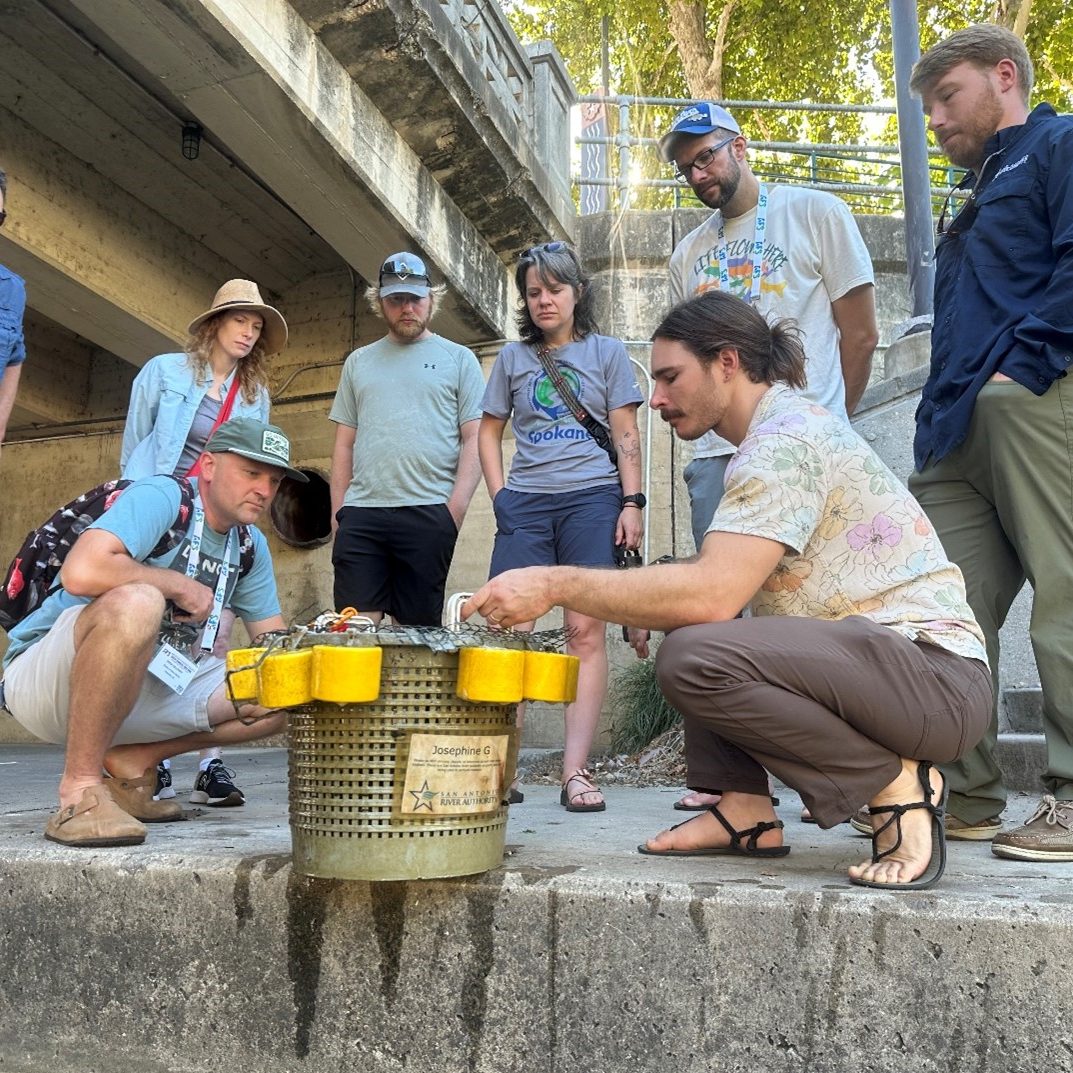
The N-EWN community is made up of over 30 partners from industry, academia and the non-profit sector.
What N-EWN’s been up to:
-
Operationalizing equity for integrated water resources management
The N-EWN People and Policy team, which consists of representatives from the University of Georgia and U.S. Army Corps of Engineers recently published a new paper in the Journal of American Water Resources, titles, “Operationalizing equity for integrated water resources management.” Abstract: Advancing social equity has been implicitly and explicitly central to water resources policy…
-
Join us for the latest N-EWN Knowledge series with Laura Naslund!
N-EWN Knowledge Series: https://limno.zoom.us/webinar/register/WN_fe7hnfnSS5CvbiTpADWmXA The next Knowledge Series lecture is on December 15 at 12:30 ET. Laura Naslund, UGA, will address Dam Removal Prioritization with Multiple Objectives. Proactive and transparent decision making about the long-term management of dams is critical for successfully managing this aging infrastructure and presents an opportunity to apply Engineering with Nature principles…
-

What it means to be a researcher: water science and community connections in rural Brazil
Story by Olivia Allen. Photos and captions provided by Cydney Seigerman. Originally posted to the River Basin Center website Plenty of scientists leave their comfort zone for research, but few relocate to another continent—N-EWN member and anthropology graduate student Cydney Seigerman has done it twice. In 2014, they worked as a Fulbright Teaching Assistant in…
Catch up with us
Join our mailing list to stay abreast of all things natural infrastructure.