Get to know N-EWN
A community of researchers, practitioners, and educators working together to advance the practice of natural infrastructure.

We work across four main branches
In order to help facilitate the widespread adoption of natural infrastructure practices across the United States, we’ve identified four main areas that need additional work:
Developing methods and standards
New tools, techniques and guidance are needed to effectively plan, design, construct and operate natural infrastructure at different scales
Assessing benefits and costs
Natural infrastructure provides communities with a broad array of economic, environmental and social benefits. Improved approaches are needed to evaluate, quantify and forecast these benefits to support planning and decision making
Monitoring performance and outcomes
Technically sound, efficient and applicable methods are needed to track natural infrastructure performance over time, develop the evidence base for future designs, ensure compliance with policy and inform project operations and adaptive management
Integrating people and policy
Providing infrastructure that supports human wellbeing and equitably meets the needs of diverse communities requires integration of human values, attitudes, beliefs, perceptions and policies with modern communication and collaboration practices
Combining a diversity of on-the-ground experience with interdisciplinary teams.
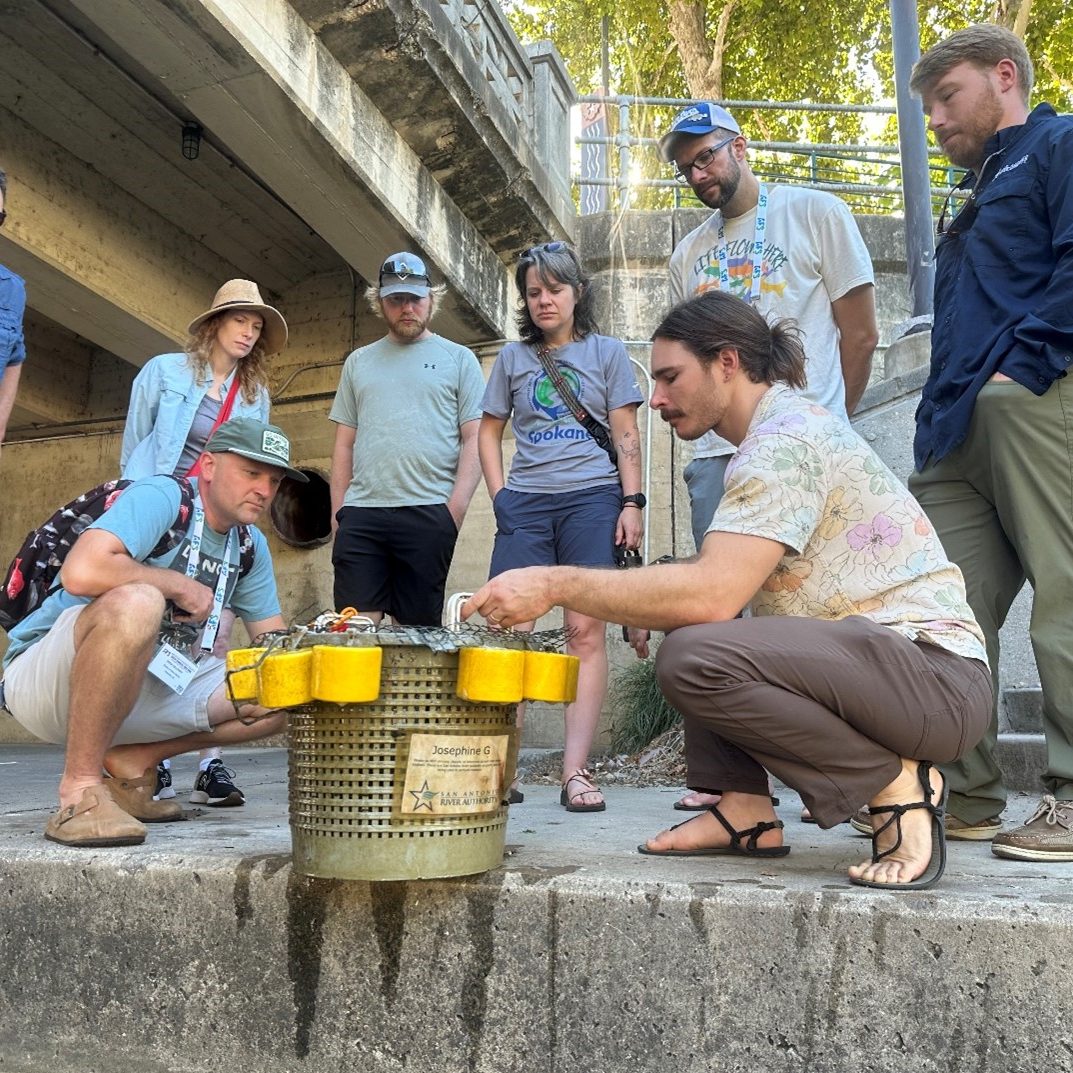
The N-EWN community is made up of over 30 partners from industry, academia and the non-profit sector.
What N-EWN’s been up to:
-
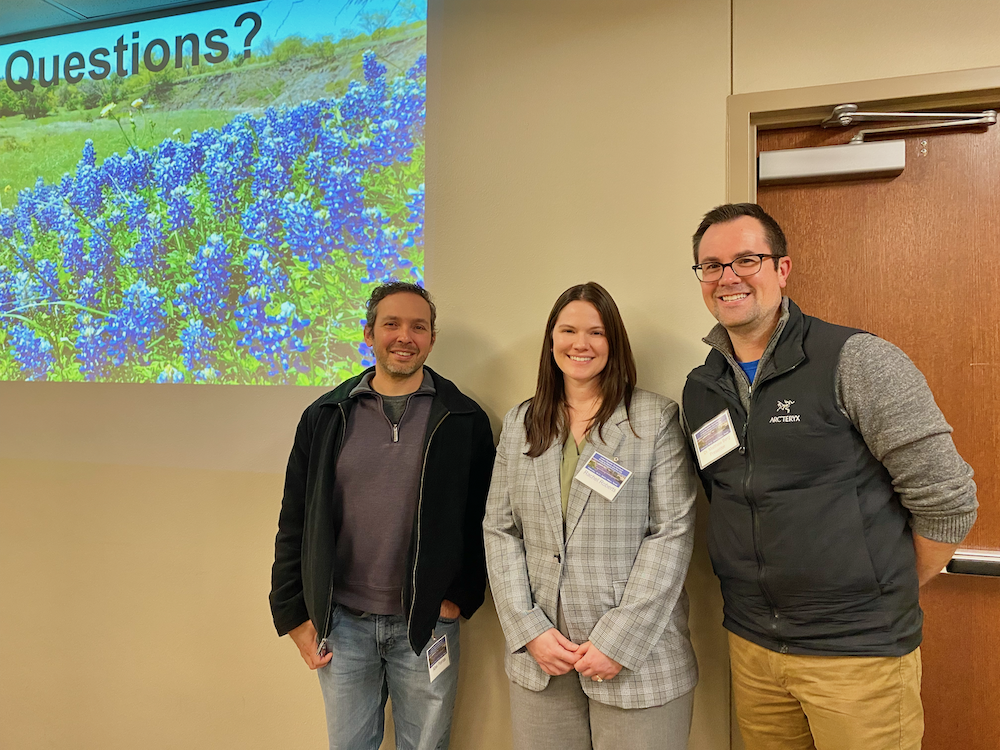
N-EWN partners represent at the 2025 Urban Riparian Symposium in Texas
Last month, we said “Hi, N-EWN” in Texas 👋🤠N-EWN partners City of Austin, San Antonio River Authority and Simfero teamed up to deliver a panel session on nature-based solutions at different scales as part of the 2025 Urban Riparian Symposium in Texas. Hosted by the Texas Riparian Association and the Texas Water Resources Institute, the…
-

Natural Infrastructure Fellows attend Ducks Unlimited National Engineering Meeting
Originally published here by the UGA Institute for Resilient Infrastructure Systems. Written by Olivia Allen. As part of the Institute for Resilient Infrastructure Systems (IRIS)’ commitment to providing educational opportunities grounded in the real world, we partnered with Ducks Unlimited (DU) to create the Natural Infrastructure (NI) Fellowship. The NI Fellowship offers funded graduate fellowships for Masters students…
-

From the University of Florida: Cutting-edge research takes center stage at coastal summit
Originally posted on the University of Florida, Center for Coastal Coastal Solutions, website. Read the original post here. The survival of eelgrass, once the dominant seagrass species in Chesapeake Bay—the nation’s largest estuary—is now severely threatened, primarily due to rising temperatures and heatwaves. Traditional seagrass restoration efforts in the bay have struggled to sustain healthy…
Catch up with us
Join our mailing list to stay abreast of all things natural infrastructure.