Get to know N-EWN
A community of researchers, practitioners, and educators working together to advance the practice of natural infrastructure.

We work across four main branches
In order to help facilitate the widespread adoption of natural infrastructure practices across the United States, we’ve identified four main areas that need additional work:
Developing methods and standards
New tools, techniques and guidance are needed to effectively plan, design, construct and operate natural infrastructure at different scales
Assessing benefits and costs
Natural infrastructure provides communities with a broad array of economic, environmental and social benefits. Improved approaches are needed to evaluate, quantify and forecast these benefits to support planning and decision making
Monitoring performance and outcomes
Technically sound, efficient and applicable methods are needed to track natural infrastructure performance over time, develop the evidence base for future designs, ensure compliance with policy and inform project operations and adaptive management
Integrating people and policy
Providing infrastructure that supports human wellbeing and equitably meets the needs of diverse communities requires integration of human values, attitudes, beliefs, perceptions and policies with modern communication and collaboration practices
Combining a diversity of on-the-ground experience with interdisciplinary teams.
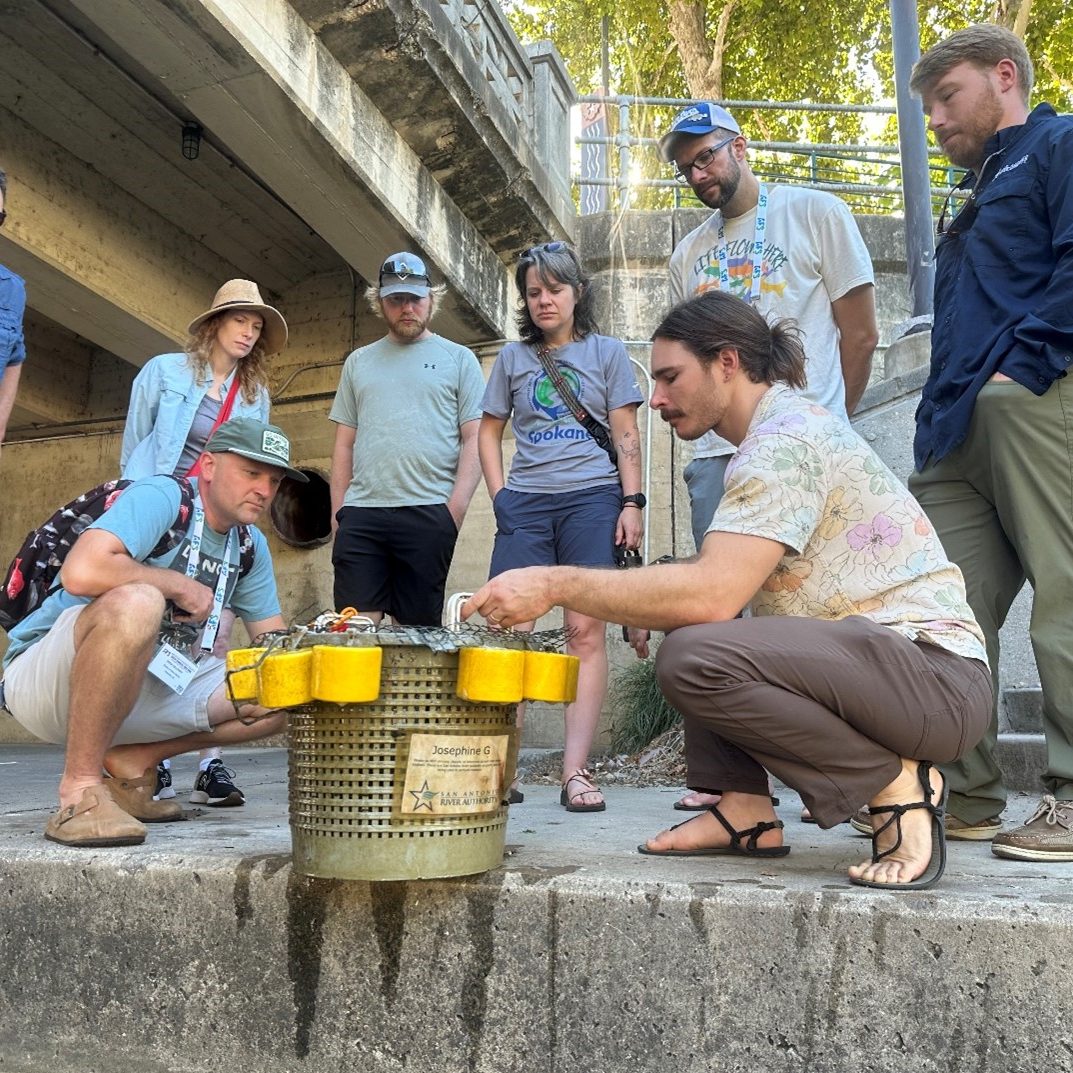
The N-EWN community is made up of over 30 partners from industry, academia and the non-profit sector.
What N-EWN’s been up to:
-

Finding homes for future fowl: Ducks Unlimited student heads into the lowcountry to assess waterfowl habitat
Our partners at the University of Georgia Institute for Resilient Infrastructure Systems and conservation nonprofit Ducks Unlimited have been collaborating for years, but one of their biggest projects is the Natural Infrastructure Graduate Fellowship: Master’s students in a variety of fields are funded by Ducks Unlimited to work towards a better future for wetlands. One…
-

Community science and small sensors have the potential for big impact in San Juan, Puerto Rico
An upcoming NSF-funded research project led by the University of Georgia’s Institute for Resilient Infrastructure Systems will show that small, cheap sensors can have a big impact: gathering information to allow more accurate flood modeling. Small sensors, that is, and the hard work of many dedicated researchers and community members. The project is based in…
-

UGA IRIS to host 25th Anniversity Meeting of AEES
The first annual meeting of the American Ecological Engineering Society was held in Athens, Georgia at the University of Georgia in 2001, and this year, UGA is hosting again for the 25th Annual Meeting of AEES! The American Ecological Engineering Society (AEES) was first discussed in 1999 at a workshop on ecological engineering in Columbus,…
Catch up with us
Join our mailing list to stay abreast of all things natural infrastructure.