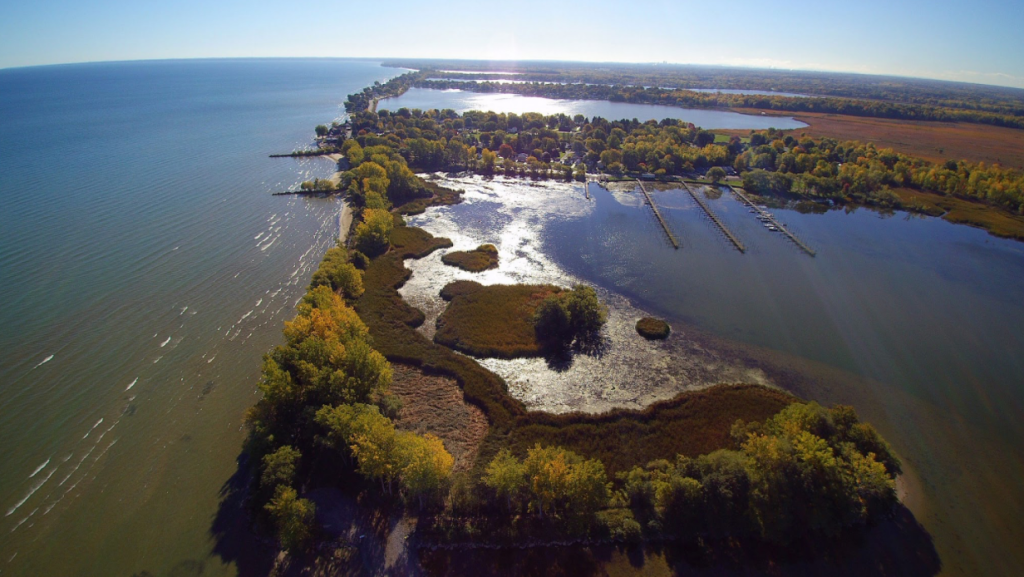

About FloodMAR
Managed aquifer recharge using floodwater (FloodMAR) is a nature-based solution that leverages the natural storage capacity of aquifers to capture water during a flood. This protects communities against flood damage, stores the water
for layer use, and restores the health of groundwater ecosystems, in addition to many other social, economic, and environmental benefits. The US Army Corps of Engineers (USACE) and many smaller water management agencies are looking
for opportunities to incorporate FloodMAR into their flood risk management strategy. The Network for Engineering with Nature has assembled this research team to help find those opportunities, and to provide guidance on how practitioners
can maximize the benefits and minimize the costs of implementing FloodMAR projects.
Problem
As floods become more severe due to climate and land use changes, and sediment retention reduces the operational capacity of reservoirs, more storage will be needed to capture flood volumes and mitigate flood damage. However, the best
sites for surface water storage are already developed and new projects are becoming increasingly expensive. Meanwhile, growing populations and economic production are draining aquifers well beyond what is sustainable given their
natural recharge rate.
FloodMAR turns both these problems into opportunities by moving excess water from the river system into the overtaxed aquifers for long-term storage. This improves aquifer sustainability and turns otherwise dangerous floodwaters into
a new source of water supply.
The Water Resources Development Act (WRDA) of 2016 provided USACE the authority to undertake water supply conservation projects for drought resilience in Section 1116. But USACE has not developed a strategic framework for the incorporation
of FoodMAR into its operations. The Institute for Water Research found that Districts only engage with aquifer recharge in an “ad hoc” manner and recommended that USACE “upgrade its internal capacity in MAR,” noting that “the Nation’s
current needs and USACE’s strategic documents both point toward an important future role for MAR in USACE projects.” In response, Section 8108 of the 2022 WRDA authorized USACE to carry out up to 10 feasibility studies of MAR projects.
Where these studies will take place has not yet been determined.
Solution
The project team has developed a screening tool that USACE Districts and other water resources managers can use to identify the best sites for FloodMAR within their area of interest. This screening tool is a means for those interested
in implementing FloodMAR to seek out opportunities and local partners more strategically. It uses a combination of hydrological and geophysical modeling combined with social science research to guide interested parties through every
step of the site selection process, uncovering potential hurdles as well as hidden opportunities and benefits.
● Statistical hydrology was used to determine water availability, reconstructing historical time series for ungauged watersheds and estimating how often and in what volume flood waters can be expected.
● Machine learning was used to determine aquifer status, interpolating depth to groundwater in the area between known monitoring wells. A historical time series of groundwater level was reconstructed and used to estimate the total
amount of groundwater drawdown.
● Geospatial analysis was used to determine land surface suitability for MAR. Areas that have low slope and high soil permeability were mapped and delineated, with urban areas excluded.
● Social science was used to derive helpful contextual information. Based on feedback from surveys and beta testers, data on vulnerable communities, wildfire risk, and endangered species were added to the tool. Journal articles and
technical reports are also being prepared to help practitioners incorporate these social considerations into FloodMAR planning.
Impact
Development of this screening tool and guidance documents will help accelerate the incorporation of FloodMAR into flood risk management operations. For state and local water management agencies, implementing FloodMAR has the potential
to increase storage capacity, increase drought resiliency, reduce flood risks, reduce strains on existing flood control infrastructure, and improve ecosystem processes. For floodplain restoration advocates, this tool can help locate
areas where aquifers are most likely to benefit. FloodMAR can restore springs, wetlands, ephemeral ponds, and other valuable habitat, while increasing the reliability of groundwater supplies for human use.
This work will support USACE in undertaking the feasibility studies authorized by section 8108 of WRDA 2022, and in carrying out its National Portfolio Assessment. Reservoir managers interested in forecast-informed reservoir operations
(FIRO) may also find the tool useful. FloodMAR is often coupled with FIRO as a “no regrets” beneficial use of water released from reservoir storage. More storage space is made available in the reservoir, and the released water can
be diverted and stored in an aquifer, greatly increasing the total operational storage capacity available to the reservoir manager.
Collaborators





Points of Contact
Aubrey Harris, PE, PhD
Research Civil Engineer, USACE-ERDC Environmental Laboratory
aubrey.e.harris@usace.army.mil
Daniel Siegel
Lead Geospatial Scientist, Earth Genome
daniel@earthgenome.org
Laura Castro-Diaz
Assistant Professor, University of Massachusetts Boston
laura.castrodiaz@umb.edu
Physical Science Team
Aaron Byrd
Research Civil Engineer, USACE-ERDC Coastal and Hydraulics Laboratory
Giuseppe Mascaro
Associate Professor, Arizona State University
Tianfang Xu
Assistant Professor, Arizona State University
Suraj Tiwari
Graduate Research Associate, Arizona State University
Glen Low
Co-Founder, Earth Genome
Qinyuan Dai
Graduate Research Associate, Arizona State University
Social Science Team
Melissa Beresford
Associate Professor, San Jose State University
Jelena Jankovic-Rankovic
Assistant Professor, University of South Carolina
Jonathan Hallemeier
Interdisciplinary Study Manager, USACE
Amber Wutich
Regents & President’s Professor, Arizona State University
Margaret du Bray
Assistant Professor, University of Northern Colorado
Cara Jacob
Postdoctoral Research Scholar, Arizona State University
Software Development Team
Dan McCarey
Senior Software Engineer, Earth Genome