Get to know N-EWN
A community of researchers, practitioners, and educators working together to advance the practice of natural infrastructure.

We work across four main branches
In order to help facilitate the widespread adoption of natural infrastructure practices across the United States, we’ve identified four main areas that need additional work:
Developing methods and standards
New tools, techniques and guidance are needed to effectively plan, design, construct and operate natural infrastructure at different scales
Assessing benefits and costs
Natural infrastructure provides communities with a broad array of economic, environmental and social benefits. Improved approaches are needed to evaluate, quantify and forecast these benefits to support planning and decision making
Monitoring performance and outcomes
Technically sound, efficient and applicable methods are needed to track natural infrastructure performance over time, develop the evidence base for future designs, ensure compliance with policy and inform project operations and adaptive management
Integrating people and policy
Providing infrastructure that supports human wellbeing and equitably meets the needs of diverse communities requires integration of human values, attitudes, beliefs, perceptions and policies with modern communication and collaboration practices
Combining a diversity of on-the-ground experience with interdisciplinary teams.
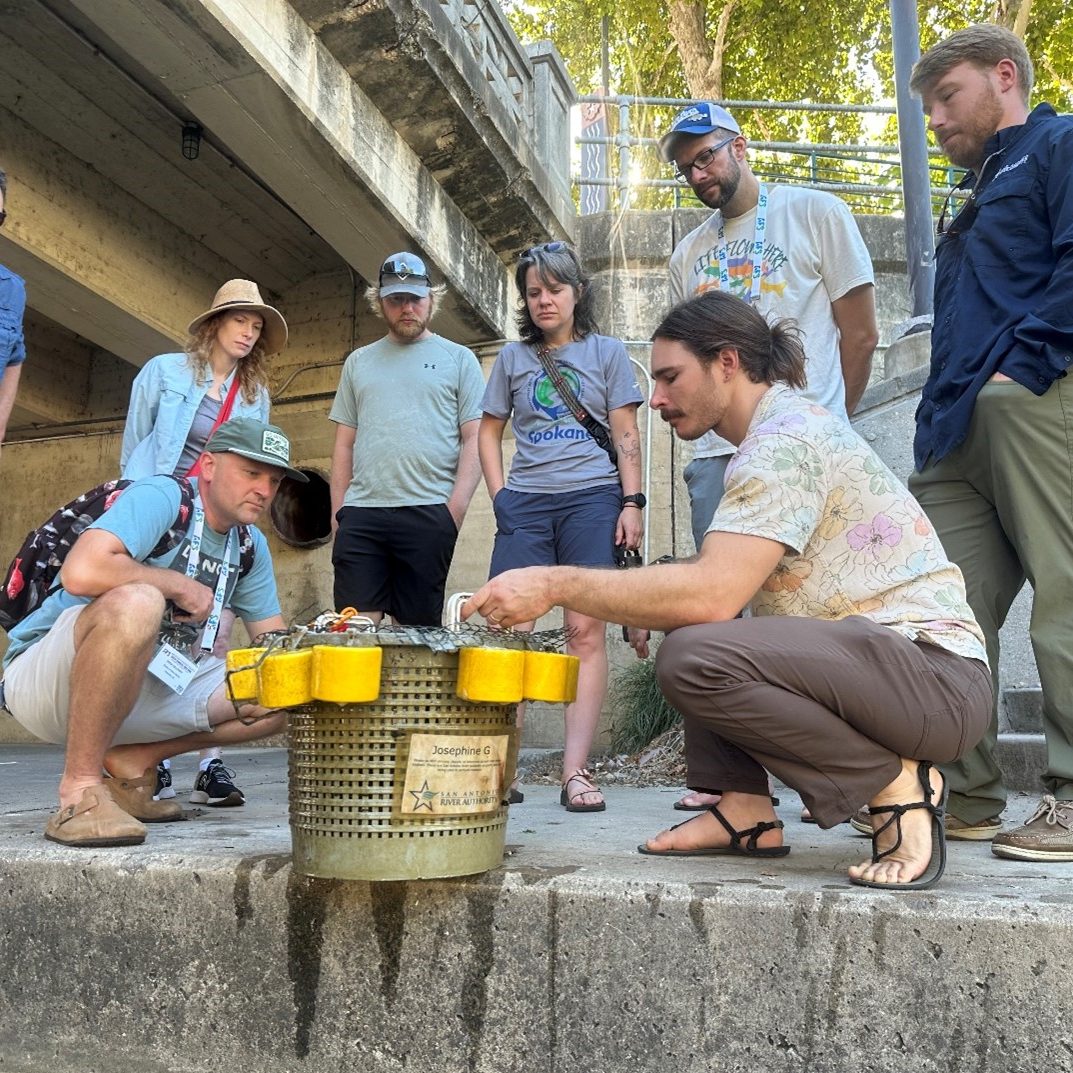
The N-EWN community is made up of over 30 partners from industry, academia and the non-profit sector.
What N-EWN’s been up to:
-

N-EWN Graduate Student, Sheppard Medlin, shares N-EWN work at ASBPA
Sheppard Medlin, who is pursuing his Master of Engineering at UGA, shared the work he is doing with Dr. Matt Bilskie on scaling natural infrastructure at the American Shore and Beach Preservation Association national conference. Sheppards poster is available here. The “scaling natural infrastructure” project is working to answer the following research questions: 1) Traditionally,…
-

Workshop Recap: Beneficial Use of Dredge Materials
Written by Amanda Tritinger On July 13-15, 2021, 58 representatives from USACE HQ, 2 USACE Divisions, 14 USACE Districts, and USACE ERDCs’ Environmental (EL) and Coastal Hydraulics (CHL) Laboratories came together and participated in a virtual workshop on the beneficial use (BU) of dredged material. The workshop was co-hosted by Dr. Amanda Tritinger (ERDC-CHL) and…
-

Story map: At what scale does natural infrastructure make the biggest impact?
N-EWN researchers Dr. Matt Bilskie (Assistant Professor in the College of Engineering, University of Georgia) and Dr. Amanda Tritinger (Research Hydraulic Engineer with the U.S. Army Corps of Engineers) and their team of collaborators set out to find out. It can be difficult to assess the real-world impacts of a natural infrastructure project, so the…
Catch up with us
Join our mailing list to stay abreast of all things natural infrastructure.