Get to know N-EWN
A community of researchers, practitioners, and educators working together to advance the practice of natural infrastructure.

We work across four main branches
In order to help facilitate the widespread adoption of natural infrastructure practices across the United States, we’ve identified four main areas that need additional work:
Developing methods and standards
New tools, techniques and guidance are needed to effectively plan, design, construct and operate natural infrastructure at different scales
Assessing benefits and costs
Natural infrastructure provides communities with a broad array of economic, environmental and social benefits. Improved approaches are needed to evaluate, quantify and forecast these benefits to support planning and decision making
Monitoring performance and outcomes
Technically sound, efficient and applicable methods are needed to track natural infrastructure performance over time, develop the evidence base for future designs, ensure compliance with policy and inform project operations and adaptive management
Integrating people and policy
Providing infrastructure that supports human wellbeing and equitably meets the needs of diverse communities requires integration of human values, attitudes, beliefs, perceptions and policies with modern communication and collaboration practices
Combining a diversity of on-the-ground experience with interdisciplinary teams.
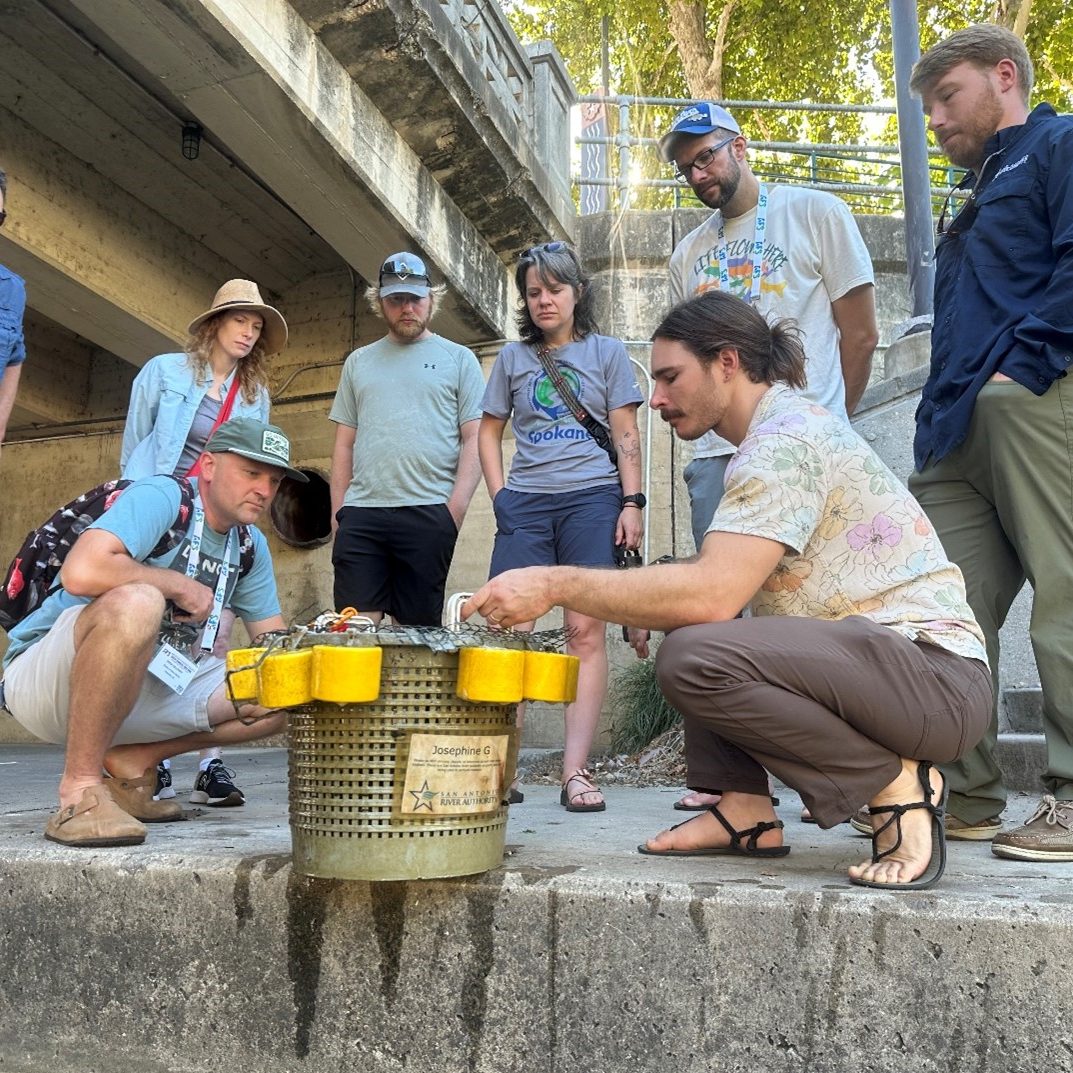
The N-EWN community is made up of over 30 partners from industry, academia and the non-profit sector.
What N-EWN’s been up to:
-

Thesis Defense: Modeling Oyster Reef Resilience with Rebecca Stanley
Join us for a N-EWN graduate student’s thesis defense! Rebecca Stanley, MS candidate in Civil & Environmental Engineering with Emphasis in Environmental Engineering in the College of Engineering, University of Georgia will defend her thesis: “Modeling Oyster Reef Resilience as a Form of Nature-Based Infrastructure in Response to Local Hydrodynamic Conditions” The application of nature-based infrastructure (NBI) has become…
-

Natural infrastructure feature of the month: urban trees
Most people don’t stop to consider the trees that they pass each day as they go about their business in cities around the world, but these urban trees provide important functions for our homes and neighborhoods, including cooling ambient temperatures, purifying and absorbing rainwater, and absorbing carbon dioxide. The cooling properties of urban trees are…
-
October 2022 Knowledge Series: Translating EWN Research into Practice: Levee Setbacks on the Lower Missouri River
Matt Chambers, University of Georgia Guest speaker Matt Chambers discusses modeling studies that he and his colleagues have performed which suggest significant hydraulic benefits in idealized streams and on the Wabash River. This research is being translated into practice on the Lower Missouri River in partnership with the USACE Omaha District, ERDC, and local levee district managers.…
Catch up with us
Join our mailing list to stay abreast of all things natural infrastructure.