Get to know N-EWN
A community of researchers, practitioners, and educators working together to advance the practice of natural infrastructure.

We work across four main branches
In order to help facilitate the widespread adoption of natural infrastructure practices across the United States, we’ve identified four main areas that need additional work:
Developing methods and standards
New tools, techniques and guidance are needed to effectively plan, design, construct and operate natural infrastructure at different scales
Assessing benefits and costs
Natural infrastructure provides communities with a broad array of economic, environmental and social benefits. Improved approaches are needed to evaluate, quantify and forecast these benefits to support planning and decision making
Monitoring performance and outcomes
Technically sound, efficient and applicable methods are needed to track natural infrastructure performance over time, develop the evidence base for future designs, ensure compliance with policy and inform project operations and adaptive management
Integrating people and policy
Providing infrastructure that supports human wellbeing and equitably meets the needs of diverse communities requires integration of human values, attitudes, beliefs, perceptions and policies with modern communication and collaboration practices
Combining a diversity of on-the-ground experience with interdisciplinary teams.
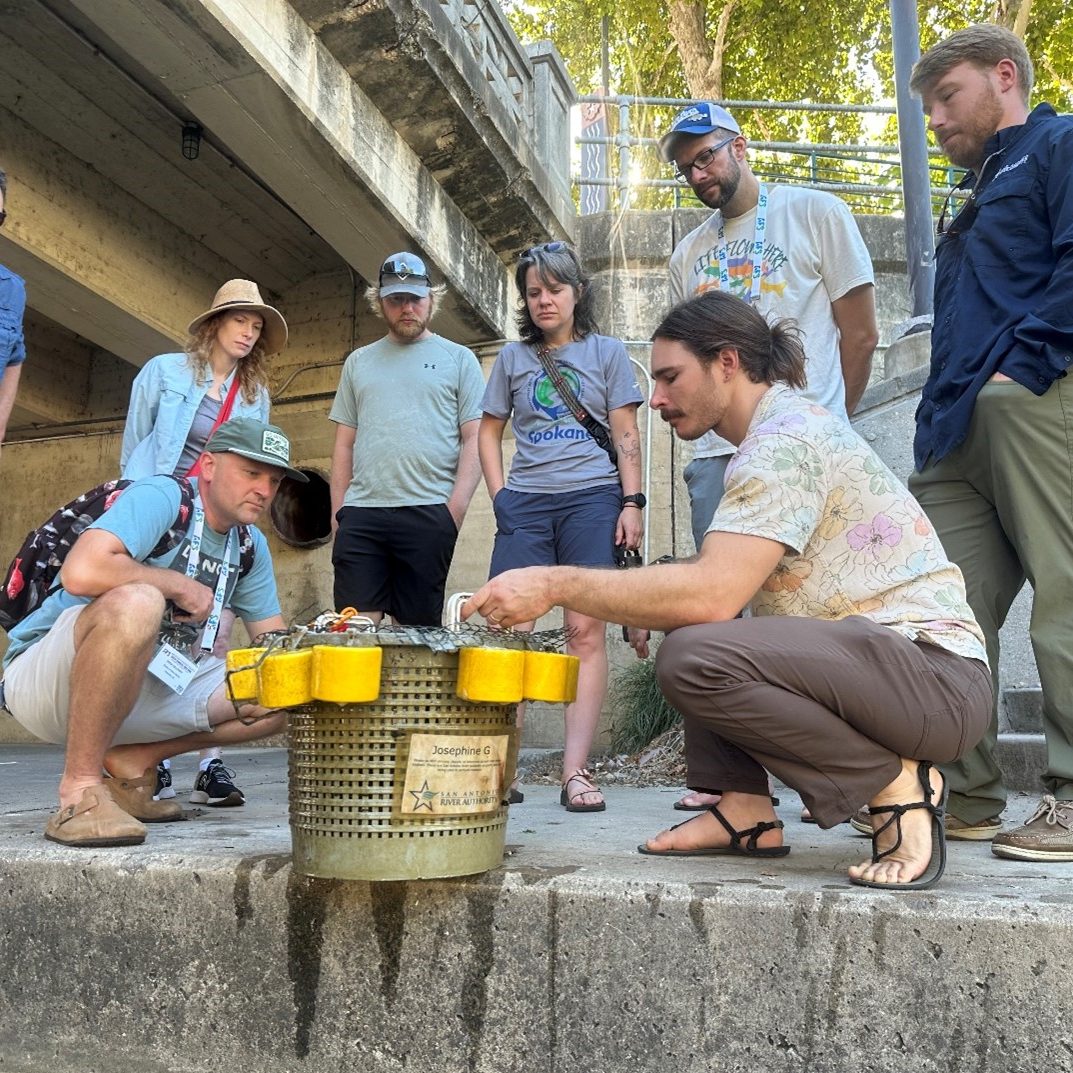
The N-EWN community is made up of over 30 partners from industry, academia and the non-profit sector.
What N-EWN’s been up to:
-

Partner Profile: University of Florida Center for Coastal Solutions
Center for Coastal Solutions, University of Florida The Center for Coastal Solutions (CCS) in the UF Herbert Wertheim College of Engineering develops and delivers the best available science and technology for use by decision makers to improve water quality, restore ecosystems and build coastal resilience. We focus on driving impacts in four program areas: 1)…
-

New publication from UCSC explores marsh restoration for flood risk reduction
In a recent study published in Nature, coastal researchers evaluate salt marsh restoration as a flood prevention measure to protect community water resilience. The study, titled “The value of marsh restoration for flood risk in an urban estuary,” utilizes a hydrodynamic model of San Francisco Bay to simulate storms and their flood impacts with and…
-

May 2024 Knowledge Series: Remote Sensing Capabilities to Support EWN Projects
Molly Reid, Research Geographer and Team Lead, Christina Saltus, Research Geographer, & Glenn Suir, Research Agronomist and Adjunct Professor, USACE ERDC Environmental Lab There is an increasing opportunity and number of EWN projects seeking support to use remotely sensed data and geospatial methodologies to help quantify environmental benefits. Remote sensing approaches are expected to be instrumental in…
Catch up with us
Join our mailing list to stay abreast of all things natural infrastructure.