Get to know N-EWN
A community of researchers, practitioners, and educators working together to advance the practice of natural infrastructure.

We work across four main branches
In order to help facilitate the widespread adoption of natural infrastructure practices across the United States, we’ve identified four main areas that need additional work:
Developing methods and standards
New tools, techniques and guidance are needed to effectively plan, design, construct and operate natural infrastructure at different scales
Assessing benefits and costs
Natural infrastructure provides communities with a broad array of economic, environmental and social benefits. Improved approaches are needed to evaluate, quantify and forecast these benefits to support planning and decision making
Monitoring performance and outcomes
Technically sound, efficient and applicable methods are needed to track natural infrastructure performance over time, develop the evidence base for future designs, ensure compliance with policy and inform project operations and adaptive management
Integrating people and policy
Providing infrastructure that supports human wellbeing and equitably meets the needs of diverse communities requires integration of human values, attitudes, beliefs, perceptions and policies with modern communication and collaboration practices
Combining a diversity of on-the-ground experience with interdisciplinary teams.
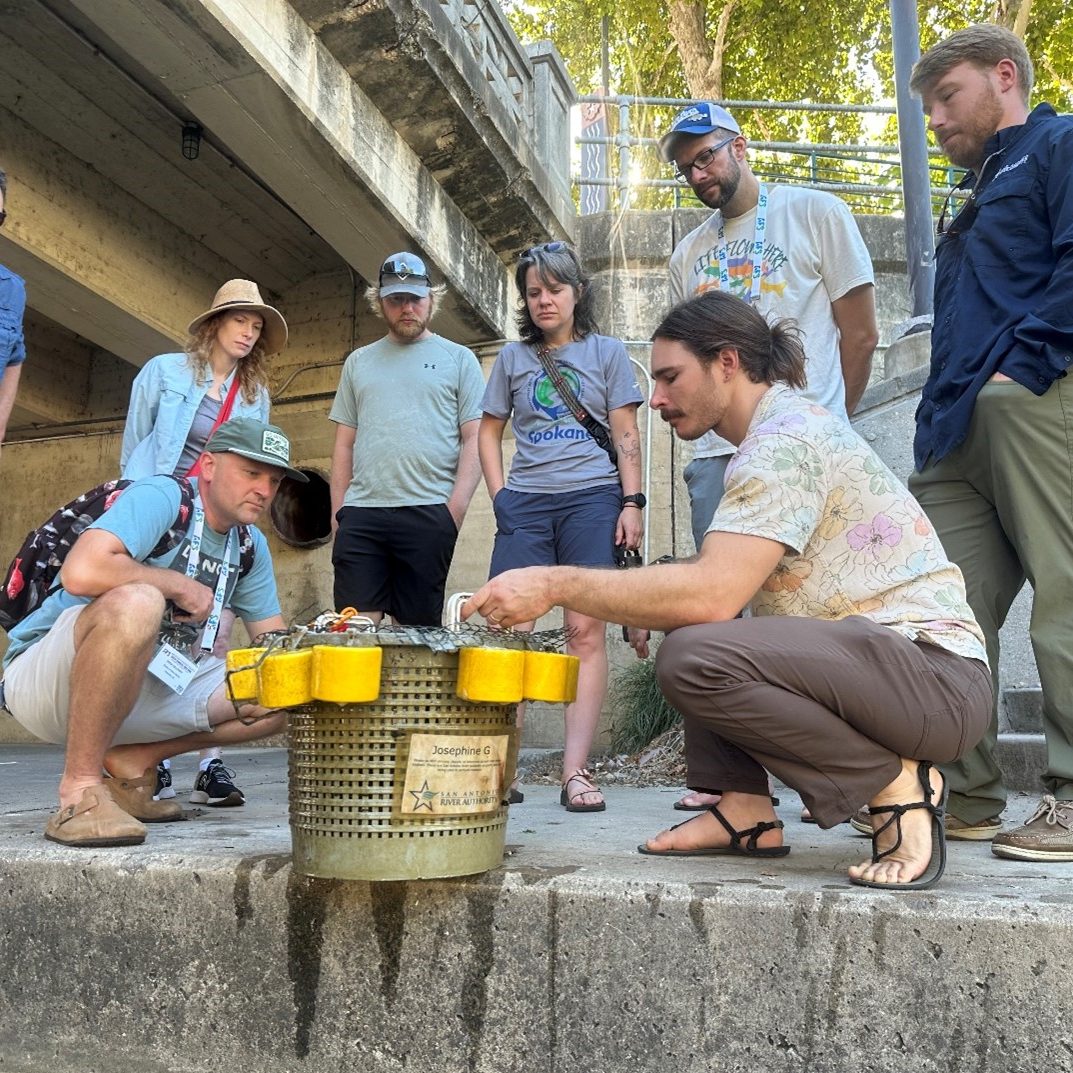
The N-EWN community is made up of over 30 partners from industry, academia and the non-profit sector.
What N-EWN’s been up to:
-
March 2022 Knowledge Series: Refining a Vision for Future Synergy Between Infrastructure and Biodiversity Conservation
Charles van Rees, UGA This webinar focuses on the relationship between Biodiversity and its conservation and Infrastructure and related disciplines, why this is important for today’s challenges, what this relationship looks like, how it has changed, and what it will look like in the future. Dr. Charles B. van Rees addresses what we can do…
-

Stream Crossings in Georgia: A Handbook for Connectivity and Resilience
As you drive the winding roads of Georgia, it’s a common occurrence to sail over a culvert or bridge and get a brief glimpse of a stream burbling away into the overgrowth before you’re whisked on to new views. These intersections of infrastructure and nature are so commonplace that we hardly think about them. However,…
-

Rethinking Riverine Flooding: Q&A with Matt Chambers
Matt Chambers is a PhD student working under IRIS Director Dr. Brian Bledsoe. His work modeling the impacts of levee setbacks on upstream and downstream communities highlights how natural infrastructure solutions can increase community resilience. In the past, engineers attempted to prevent rivers from flooding by placing tall walls on either side of them, called…
Catch up with us
Join our mailing list to stay abreast of all things natural infrastructure.