Get to know N-EWN
A community of researchers, practitioners, and educators working together to advance the practice of natural infrastructure.

We work across four main branches
In order to help facilitate the widespread adoption of natural infrastructure practices across the United States, we’ve identified four main areas that need additional work:
Developing methods and standards
New tools, techniques and guidance are needed to effectively plan, design, construct and operate natural infrastructure at different scales
Assessing benefits and costs
Natural infrastructure provides communities with a broad array of economic, environmental and social benefits. Improved approaches are needed to evaluate, quantify and forecast these benefits to support planning and decision making
Monitoring performance and outcomes
Technically sound, efficient and applicable methods are needed to track natural infrastructure performance over time, develop the evidence base for future designs, ensure compliance with policy and inform project operations and adaptive management
Integrating people and policy
Providing infrastructure that supports human wellbeing and equitably meets the needs of diverse communities requires integration of human values, attitudes, beliefs, perceptions and policies with modern communication and collaboration practices
Combining a diversity of on-the-ground experience with interdisciplinary teams.
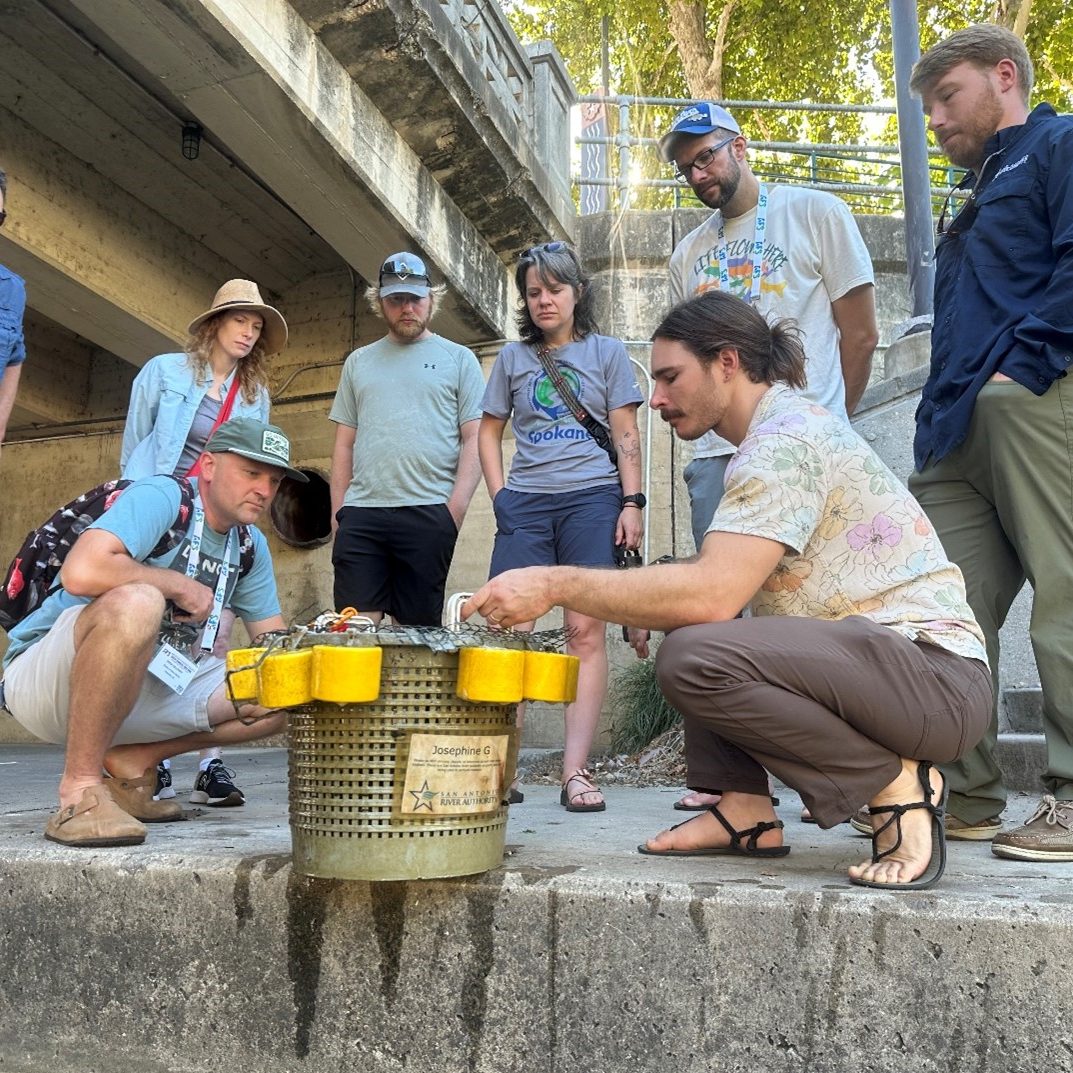
The N-EWN community is made up of over 30 partners from industry, academia and the non-profit sector.
What N-EWN’s been up to:
-

N-EWN Partners win University of Georgia, Office of Research Awards
This past week, the University of Georgia’s Office of Research announced the winners of the 43rd annual Research Awards. Sponsored by the University of Georgia Research Foundation, the awards recognize UGA faculty, postdoctoral researchers and graduate students for excellence and innovation in research, scholarly creativity, technology commercialization and entrepreneurship. N-EWN and IRIS had several faculty…
-
April 2022 Knowledge Series: Restoring the Nisqually River
Daniel Krenz, USACE In 2009, the tidal waters of Puget Sound breached the Brown Farm Dike in efforts to restore the Nisqually Delta. This was the culmination of the largest tidal marsh restoration project in the Pacific Northwest. Daniel Krenz, regulatory section chief and project manager with the USACE Seattle District, discusses the history of…
-

Towards principles and policy levers for advancing living shorelines: new article published in Journal of Environmental Management
Living shorelines provide an attractive alternative to traditional shoreline armoring, such as bulkheads and seawalls. They stabilize shorelines, reduce erosion, and decrease wave energy, as well as providing recreation opportunities for nearby communities. Before they can be adopted across the landscape, however, there are several policy barriers that must be adapted. N-EWN members from the…
Catch up with us
Join our mailing list to stay abreast of all things natural infrastructure.